
Government
Government to observe National Day of Remembrance for road crash victims
President Marcos Jr. directed national agencies to join the 2026 National Day of Remembrance for Road Crash Victims, Survivors and Their Families, citing road safety.

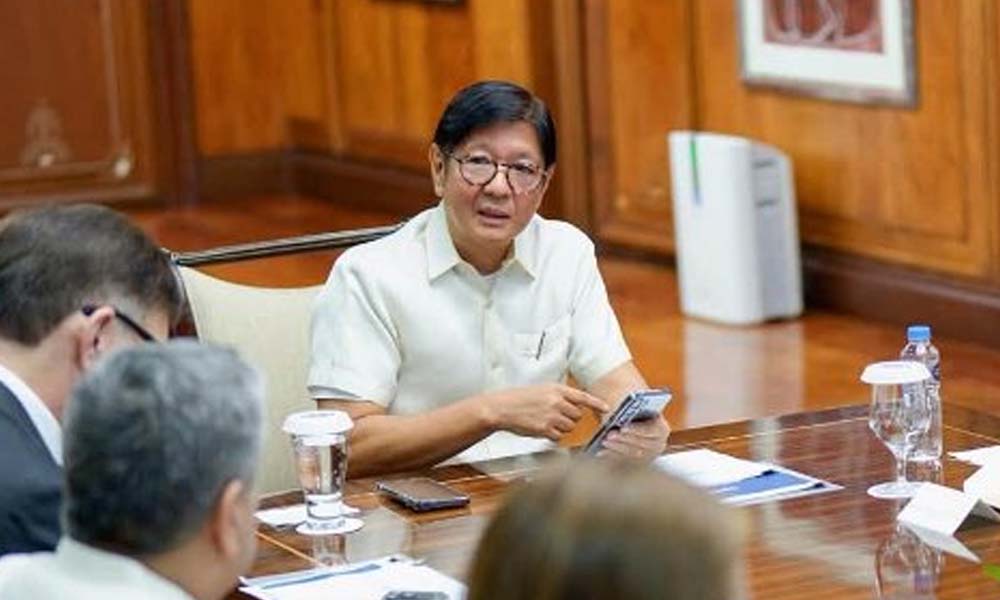
President Ferdinand Marcos Jr. has directed all national government agencies to take part in the 2026 National Day of Remembrance for Road Crash Victims, Survivors and Their Families, citing the importance of road safety and the protection of human lives.
Under Memorandum Circular No. 139, Marcos ordered government agencies, including government-owned or -controlled corporations, to extend full support and cooperation in programs and activities for the annual observance. He also encouraged local government units and the private sector to support the initiative.
Republic Act No. 11468 declares the third Sunday of November every year as the National Day of Remembrance. This year’s observance carries the theme “Remember. Reflect. Act. Save Lives.”
The law seeks to protect the public from road hazards, honor those who lost their lives in road crashes and recognize the suffering of affected families and communities. The observance also aligns with Proclamation No. 2092, series of 2010, which declared the third Sunday of November as the World Day of Remembrance for Road Traffic Victims.
Under the circular, the Department of Transportation will provide overall guidance and issue the necessary guidelines for the effective implementation of programs and activities for the 2026 observance. The Presidential Communications Office was also directed to promote public awareness of related programs, activities and projects.
The circular, signed in Manila on October 26, 2026, takes effect immediately. — Marian Magtira



Government
DOST deploys 9 EVs in Apayao town
DOST deployed nine electric vehicles, charging infrastructure, and a mobile app in Apayao to provide cleaner, more affordable local transport options.

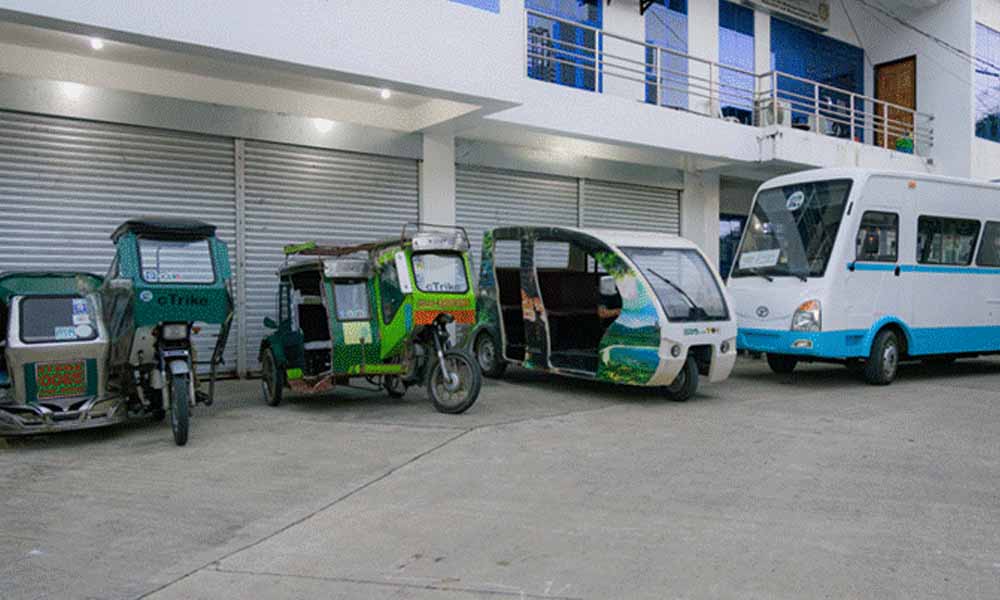
The Department of Science and Technology (DOST) has deployed nine electric vehicles, a charging station and a mobile application in Luna, Apayao, as part of efforts to establish a cleaner and more cost-efficient local transport system.
The equipment was turned over to the municipal government under the Smart Mobility for Viable, Efficient, and Cleaner Modes of Transportation (MOVE) Apayao Project.
The deployment includes one electric jeepney with a 30-passenger capacity, two six-plus-one-seater electric tricycles and six converted electric tricycle systems.
Initial tests showed that the electric jeepney, powered by a 60-kilowatt motor, could travel up to 300 kilometers on a full charge and operate on challenging terrain, including the steep roads of Marag Valley.
The DOST said charging the vehicle with P580 worth of electricity could support 22 trips, compared with the P1,000 in gasoline needed for two trips on the Pudtol-Luna route using conventional transport.
The six converted electric tricycles also showed potential income savings for drivers. According to the project, one daily charge could yield P400 in net income, compared with P200 from a conventional tricycle using three liters of gasoline.
The two other electric tricycles have lightweight composite bodies and five-kilowatt induction motors.
To support the fleet, the DOST also provided fast-charging stations with real-time monitoring capabilities and the MOVE Apayao mobile application for navigation, fleet management and route optimization.
DOST-Cordillera Administrative Region Director Nancy A. Bantog said the project introduced sustainable energy-powered transport in Luna.
“This is sustainable energy on the road, right here in the municipality of Luna,” Bantog said during the opening of the Regional Science, Technology, and Innovation Week in the town.
DOST Philippine Council for Industry, Energy and Emerging Technology Research and Development Executive Director Julius L. Leaño Jr. said the project could serve as a model for other provinces and regions.
“We hope that this will not just be one of the projects in Apayao, but one that will also set an example for the other provinces and the regions,” Leaño said.
The initiative is being implemented under the DOST’s Smart and Sustainable Communities Program in partnership with DOST-CAR, Apayao State College, Cagayan State University, the provincial government of Apayao and the municipal government of Luna.
The project is intended to support Apayao’s development priorities and biodiversity conservation efforts as a UNESCO Biosphere Reserve.
Government
Pasig opens free EV charging station, partners with Adamson on smart mobility
Pasig City opened a free Manggahan EV charging station through an Adamson University partnership using AI, quantum computing and geospatial technology to optimize infrastructure planning.
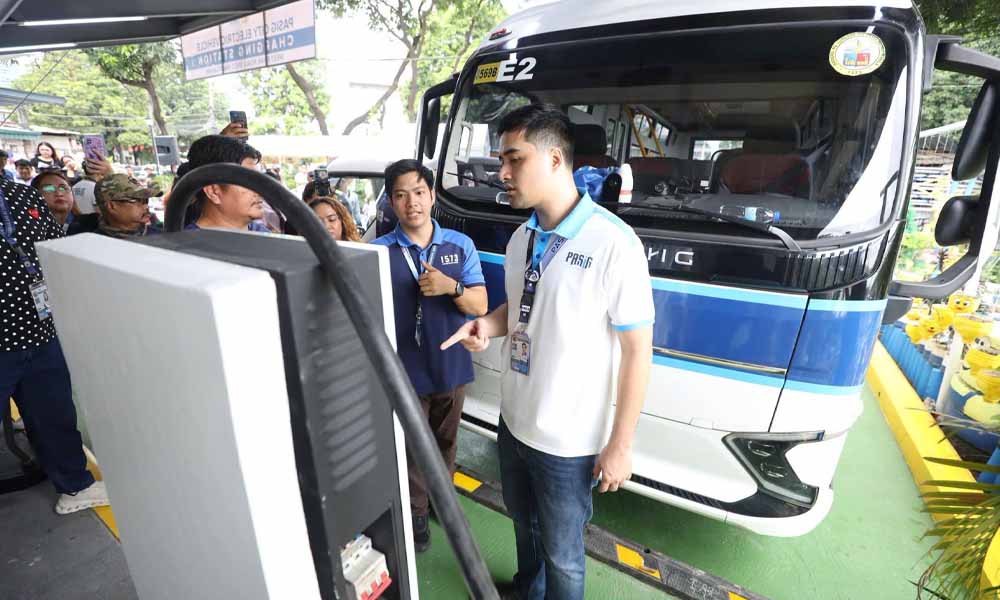
Pasig City has opened a free electric vehicle charging station in Manggahan under a new partnership with Adamson University that will use artificial intelligence, quantum computing and geospatial technology to improve charging infrastructure planning.
The facility is open to the public on a first-come, first-served basis, with priority given to city buses and other local government vehicles, Sotto said in a social media post.
The project cost about 4 million pesos, covering the charging station, bathrooms and pavement, he said.
The development is linked to a new partnership between the Pasig local government and Adamson University’s Project STArQE, which will initially focus on using artificial intelligence, quantum computing and geospatial technology to support the strategic planning and optimization of electric vehicle charging station infrastructure.
The partnership will also explore applications in intelligent transport systems, urban climate monitoring and other smart city initiatives.
Project STArQE is led by Adamson University in collaboration with Thailand’s Suranaree University of Technology and the Quantum Computing Society of the Philippines, with support from the Department of Science and Technology’s Philippine Council for Industry, Energy and Emerging Technology Research and Development (DOST-PCIEERD).
Government
E-trikes can cut fuel costs, raise drivers’ take-home pay – Marcos
President Marcos Jr. says electric tricycles could help drivers save on fuel and bring home more earnings, as government pushes local EV manufacturing.
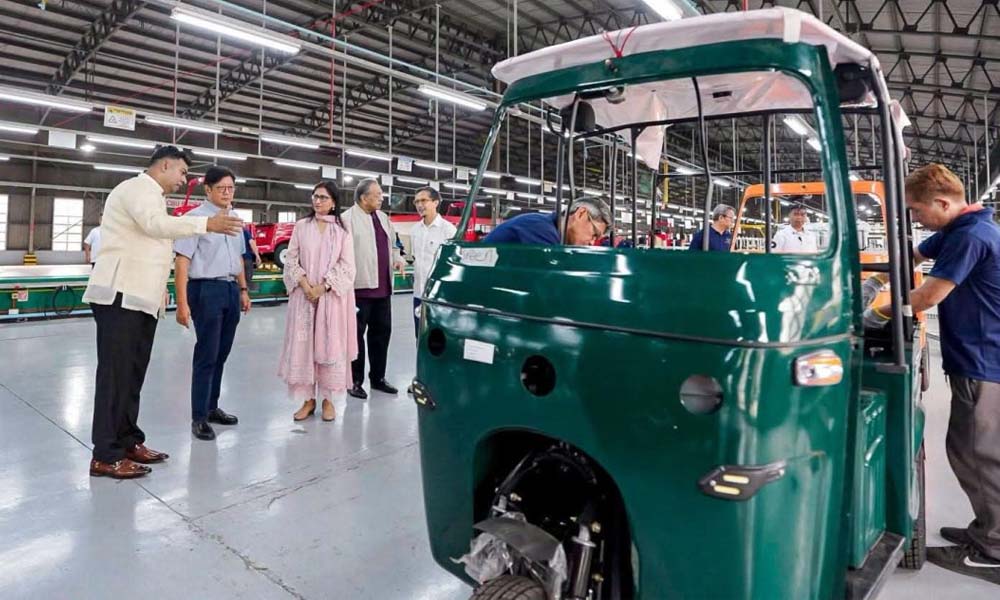
President Ferdinand Marcos Jr. said on Thursday, October 29, electric tricycles could help drivers save on fuel and bring home more of their daily earnings, as the government pushes to expand local electric vehicle manufacturing.
“Mas mababang gastos sa gasolina, mas malaki ang maiuuwi sa ating mga pamilya (Lower fuel costs mean more of our earnings can be brought home to our families),” Marcos said during a visit to the manufacturing and assembly plant of Sazgar Philippines Inc. in Biñan, Laguna.
Marcos said Sazgar’s electric three-wheelers can travel 100 to 210 kilometers on a single charge, potentially covering tricycle drivers’ daily routes in urban and provincial areas.
He noted that tricycles typically travel about 90 kilometers a day in urban areas and 110 to 120 kilometers in the provinces.
The electric models take six to eight hours to fully charge, the President said.
He also said the shift to electric tricycles could reduce drivers’ dependence on gasoline, allowing them to retain more of their earnings to support their families.
The Sazgar facility in Barangay Mamplasan has an annual assembly capacity of approximately 12,000 three-wheeled vehicles, including electric and internal combustion engine models.
Marcos said the investment could generate jobs, strengthen domestic manufacturing and create opportunities for Filipino suppliers of vehicle parts and components. He also cited the potential of electric vehicles to reduce the country’s reliance on imported fuel and support the transition to cleaner transportation.
Sazgar Philippines, which is 60% Filipino-owned, operates the company’s first manufacturing facility outside Pakistan.
The plant is also envisioned as its manufacturing hub for Southeast Asia.
Marcos urged the company to source more components from local manufacturers.
The investment comes as the government targets a 50% electric vehicle share in the country’s vehicle fleet by 2040 under its comprehensive roadmap for the electric vehicle industry.
Department of Transportation Secretary Vince Dizon, Pakistani Ambassador to the Philippines Dr. Asima Rabbani, Sazgar Philippines President Muhammad Fahim and other government and company officials attended the visit. — Marian Magtira

DOST deploys 9 EVs in Apayao town

VinFast launches VF 8 electric SUV in PH

Nissan launches electric Primera, plug-in hybrid Navara Pro

Ford offers year-end deals on Ranger, Everest, Territory Hybrid

Pasig opens free EV charging station, partners with Adamson on smart mobility

Philippine auto customer experience rises on sales, service gains – study

E-trikes can cut fuel costs, raise drivers’ take-home pay – Marcos

Government to observe National Day of Remembrance for road crash victims

Geely launches Monjaro EM-i plug-in hybrid SUV

Ford Philippines holds first service fest for owners in Laguna
Philippine auto customer experience rises on sales, service gains – study
DOST deploys 9 EVs in Apayao town
Nissan launches electric Primera, plug-in hybrid Navara Pro
Geely launches Monjaro EM-i plug-in hybrid SUV
VinFast launches VF 8 electric SUV in PH
Pasig opens free EV charging station, partners with Adamson on smart mobility
Ford offers year-end deals on Ranger, Everest, Territory Hybrid
E-trikes can cut fuel costs, raise drivers’ take-home pay – Marcos
Government to observe National Day of Remembrance for road crash victims



-
 Industry News/Updates4 weeks ago
Philippine auto customer experience rises on sales, service gains – study
-
 Government2 weeks ago
DOST deploys 9 EVs in Apayao town
-
 Events3 weeks ago
Nissan launches electric Primera, plug-in hybrid Navara Pro
-
 Events1 month ago
Ford Philippines holds first service fest for owners in Laguna
-
 Government2 months ago
What to do when you receive an NCAP notice of violation
-
 Events4 weeks ago
Geely launches Monjaro EM-i plug-in hybrid SUV
-
 Industry News/Updates2 weeks ago
VinFast launches VF 8 electric SUV in PH
-
 Government3 weeks ago
Pasig opens free EV charging station, partners with Adamson on smart mobility