
Government
MMDA, LTO, LTFRB strengthen transport coordination
MMDA, LTO, and LTFRB held a tripartite meeting on July 1 to strengthen transport coordination and traffic law enforcement.

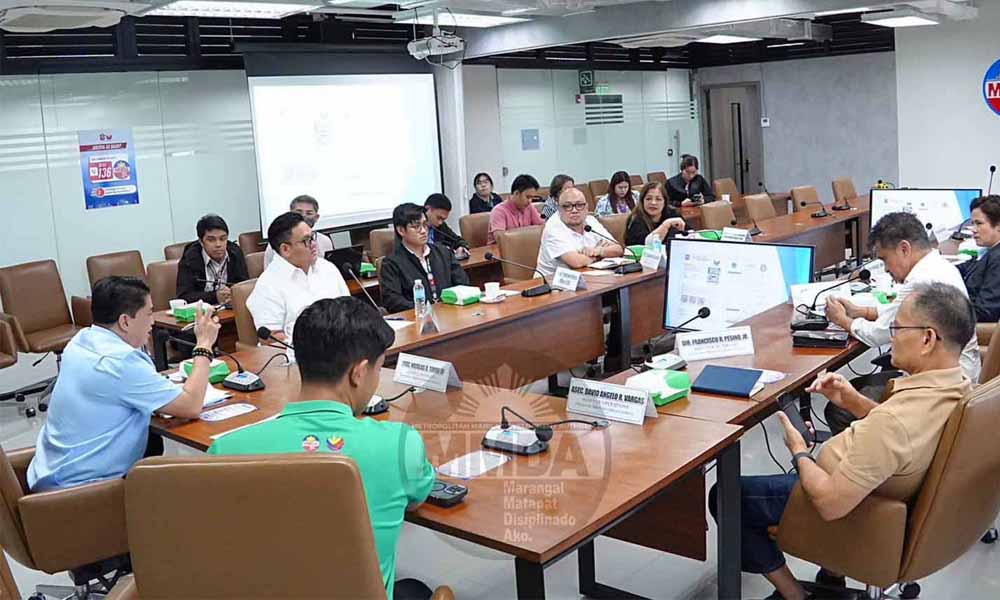
The Metropolitan Manila Development Authority (MMDA), Land Transportation Office (LTO), and Land Transportation Franchising and Regulatory Board (LTFRB) held a tripartite meeting on July 1, as part of ongoing efforts to strengthen coordination among agencies mandated to manage transportation and enforce traffic laws.
Discussions during the meeting covered road safety enhancement, traffic management improvement, stricter enforcement of existing traffic regulations, and the formulation of coordinated measures to ensure a more orderly, safe, and efficient public transport system.
The meeting also aimed to bolster information sharing, policy coordination, and inter-agency collaboration to address current challenges in the transport sector and lay down concrete solutions for faster and more efficient public service.
The agencies have previously worked together on various initiatives, including the development of the Metro Manila Road Safety Action Plan 2024-2028, which seeks to reduce road fatalities by 35 percent by 2028 based on 2019 crash data.
The MMDA, LTO, and LTFRB are also among agencies involved in implementing the government’s carpooling program, which operates on a point-to-point system with strict safety standards and requires LTFRB special permits for authorized vehicles.
The tripartite meeting builds on existing inter-agency protocols, including the LTO’s demerit point system for traffic violations and the LTFRB’s Central Public Utility Vehicle Monitoring System, which uses GPS devices to track public utility vehicles in real time .
The MMDA also said it will continue coordinating with other government agencies to promote programs aimed at maintaining order on the roads and ensuring the safety and welfare of motorists, commuters, and other road users.






Government
DOST deploys 9 EVs in Apayao town
DOST deployed nine electric vehicles, charging infrastructure, and a mobile app in Apayao to provide cleaner, more affordable local transport options.

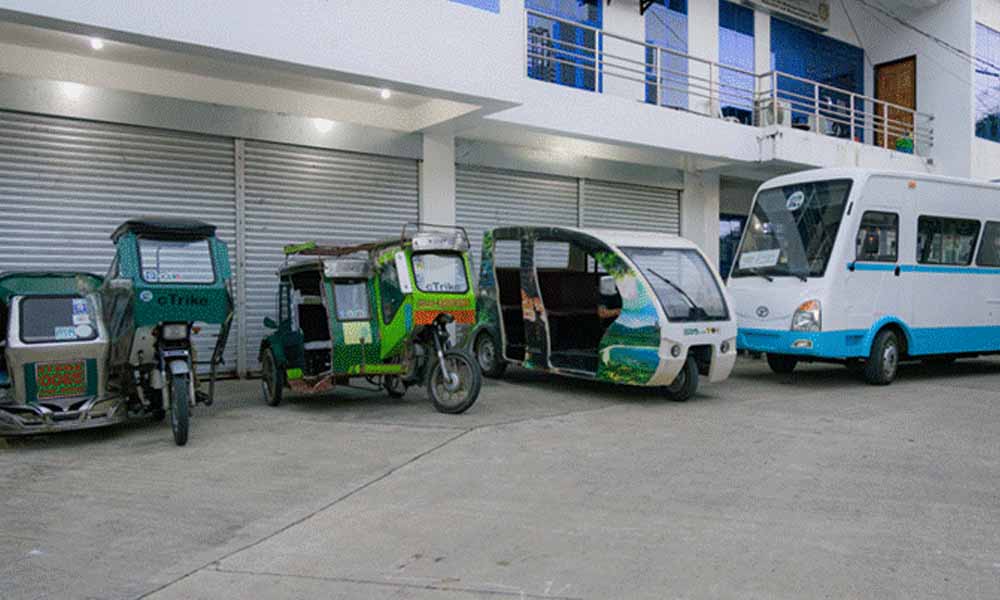
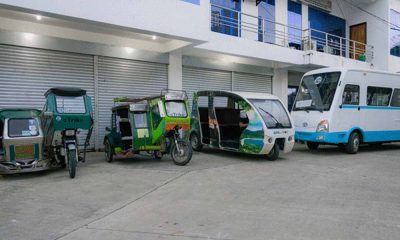
The Department of Science and Technology (DOST) has deployed nine electric vehicles, a charging station and a mobile application in Luna, Apayao, as part of efforts to establish a cleaner and more cost-efficient local transport system.
The equipment was turned over to the municipal government under the Smart Mobility for Viable, Efficient, and Cleaner Modes of Transportation (MOVE) Apayao Project.
The deployment includes one electric jeepney with a 30-passenger capacity, two six-plus-one-seater electric tricycles and six converted electric tricycle systems.
Initial tests showed that the electric jeepney, powered by a 60-kilowatt motor, could travel up to 300 kilometers on a full charge and operate on challenging terrain, including the steep roads of Marag Valley.
The DOST said charging the vehicle with P580 worth of electricity could support 22 trips, compared with the P1,000 in gasoline needed for two trips on the Pudtol-Luna route using conventional transport.
The six converted electric tricycles also showed potential income savings for drivers. According to the project, one daily charge could yield P400 in net income, compared with P200 from a conventional tricycle using three liters of gasoline.
The two other electric tricycles have lightweight composite bodies and five-kilowatt induction motors.
To support the fleet, the DOST also provided fast-charging stations with real-time monitoring capabilities and the MOVE Apayao mobile application for navigation, fleet management and route optimization.
DOST-Cordillera Administrative Region Director Nancy A. Bantog said the project introduced sustainable energy-powered transport in Luna.
“This is sustainable energy on the road, right here in the municipality of Luna,” Bantog said during the opening of the Regional Science, Technology, and Innovation Week in the town.
DOST Philippine Council for Industry, Energy and Emerging Technology Research and Development Executive Director Julius L. Leaño Jr. said the project could serve as a model for other provinces and regions.
“We hope that this will not just be one of the projects in Apayao, but one that will also set an example for the other provinces and the regions,” Leaño said.
The initiative is being implemented under the DOST’s Smart and Sustainable Communities Program in partnership with DOST-CAR, Apayao State College, Cagayan State University, the provincial government of Apayao and the municipal government of Luna.
The project is intended to support Apayao’s development priorities and biodiversity conservation efforts as a UNESCO Biosphere Reserve.
Government
Pasig opens free EV charging station, partners with Adamson on smart mobility
Pasig City opened a free Manggahan EV charging station through an Adamson University partnership using AI, quantum computing and geospatial technology to optimize infrastructure planning.
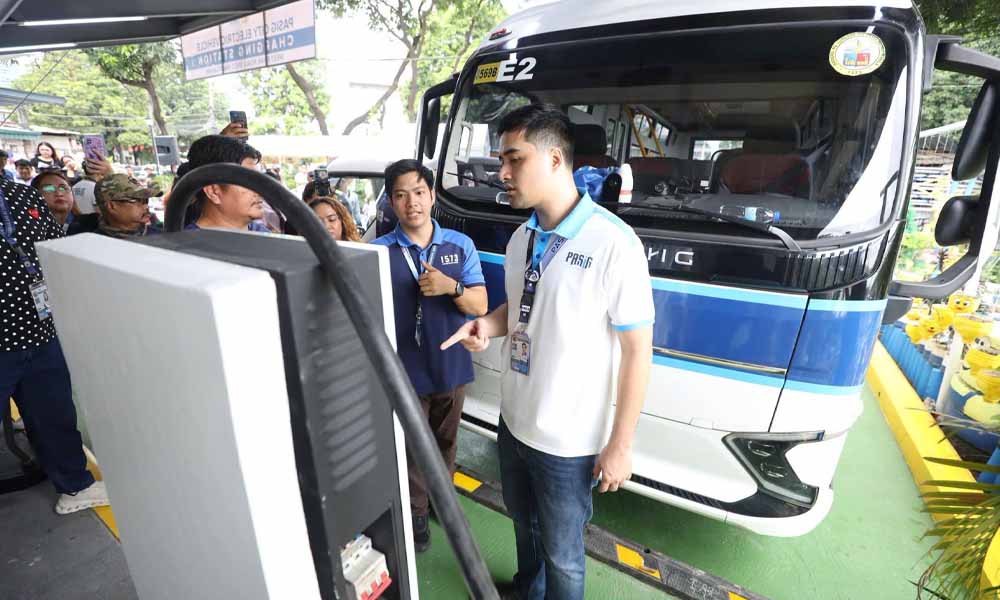
Pasig City has opened a free electric vehicle charging station in Manggahan under a new partnership with Adamson University that will use artificial intelligence, quantum computing and geospatial technology to improve charging infrastructure planning.
The facility is open to the public on a first-come, first-served basis, with priority given to city buses and other local government vehicles, Sotto said in a social media post.
The project cost about 4 million pesos, covering the charging station, bathrooms and pavement, he said.
The development is linked to a new partnership between the Pasig local government and Adamson University’s Project STArQE, which will initially focus on using artificial intelligence, quantum computing and geospatial technology to support the strategic planning and optimization of electric vehicle charging station infrastructure.
The partnership will also explore applications in intelligent transport systems, urban climate monitoring and other smart city initiatives.
Project STArQE is led by Adamson University in collaboration with Thailand’s Suranaree University of Technology and the Quantum Computing Society of the Philippines, with support from the Department of Science and Technology’s Philippine Council for Industry, Energy and Emerging Technology Research and Development (DOST-PCIEERD).
Government
E-trikes can cut fuel costs, raise drivers’ take-home pay – Marcos
President Marcos Jr. says electric tricycles could help drivers save on fuel and bring home more earnings, as government pushes local EV manufacturing.
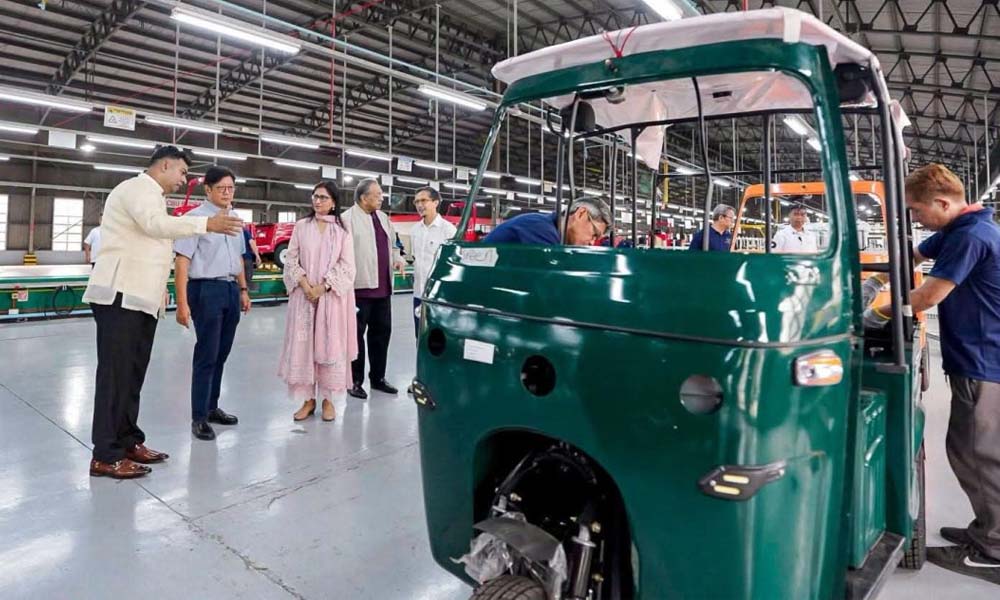
President Ferdinand Marcos Jr. said on Thursday, October 29, electric tricycles could help drivers save on fuel and bring home more of their daily earnings, as the government pushes to expand local electric vehicle manufacturing.
“Mas mababang gastos sa gasolina, mas malaki ang maiuuwi sa ating mga pamilya (Lower fuel costs mean more of our earnings can be brought home to our families),” Marcos said during a visit to the manufacturing and assembly plant of Sazgar Philippines Inc. in Biñan, Laguna.
Marcos said Sazgar’s electric three-wheelers can travel 100 to 210 kilometers on a single charge, potentially covering tricycle drivers’ daily routes in urban and provincial areas.
He noted that tricycles typically travel about 90 kilometers a day in urban areas and 110 to 120 kilometers in the provinces.
The electric models take six to eight hours to fully charge, the President said.
He also said the shift to electric tricycles could reduce drivers’ dependence on gasoline, allowing them to retain more of their earnings to support their families.
The Sazgar facility in Barangay Mamplasan has an annual assembly capacity of approximately 12,000 three-wheeled vehicles, including electric and internal combustion engine models.
Marcos said the investment could generate jobs, strengthen domestic manufacturing and create opportunities for Filipino suppliers of vehicle parts and components. He also cited the potential of electric vehicles to reduce the country’s reliance on imported fuel and support the transition to cleaner transportation.
Sazgar Philippines, which is 60% Filipino-owned, operates the company’s first manufacturing facility outside Pakistan.
The plant is also envisioned as its manufacturing hub for Southeast Asia.
Marcos urged the company to source more components from local manufacturers.
The investment comes as the government targets a 50% electric vehicle share in the country’s vehicle fleet by 2040 under its comprehensive roadmap for the electric vehicle industry.
Department of Transportation Secretary Vince Dizon, Pakistani Ambassador to the Philippines Dr. Asima Rabbani, Sazgar Philippines President Muhammad Fahim and other government and company officials attended the visit. — Marian Magtira

Green GSM bets on rent-to-own EVs, free charging to lure cabbies away from boundary system

VinFast MPV7 takes media on a road trip to Tagaytay

Ayala, BYD discuss expanding electric vehicle investments in PH

DOST deploys 9 EVs in Apayao town

VinFast launches VF 8 electric SUV in PH

Nissan launches electric Primera, plug-in hybrid Navara Pro

Ford offers year-end deals on Ranger, Everest, Territory Hybrid

Pasig opens free EV charging station, partners with Adamson on smart mobility

Philippine auto customer experience rises on sales, service gains – study

E-trikes can cut fuel costs, raise drivers’ take-home pay – Marcos
Philippine auto customer experience rises on sales, service gains – study
DOST deploys 9 EVs in Apayao town
Nissan launches electric Primera, plug-in hybrid Navara Pro
VinFast MPV7 takes media on a road trip to Tagaytay
VinFast launches VF 8 electric SUV in PH
Pasig opens free EV charging station, partners with Adamson on smart mobility
Ford offers year-end deals on Ranger, Everest, Territory Hybrid
Ayala, BYD discuss expanding electric vehicle investments in PH
Green GSM bets on rent-to-own EVs, free charging to lure cabbies away from boundary system



-
 Industry News/Updates4 weeks ago
Philippine auto customer experience rises on sales, service gains – study
-
 Government3 weeks ago
DOST deploys 9 EVs in Apayao town
-
 Events3 weeks ago
Nissan launches electric Primera, plug-in hybrid Navara Pro
-
 Government2 months ago
What to do when you receive an NCAP notice of violation
-
 Events1 month ago
Ford Philippines holds first service fest for owners in Laguna
-

 Events1 month ago
Geely launches Monjaro EM-i plug-in hybrid SUV
-
 Industry News/Updates2 days ago
VinFast MPV7 takes media on a road trip to Tagaytay
-
 Industry News/Updates3 weeks ago
VinFast launches VF 8 electric SUV in PH